You see a word on a flashcard and remember the translation immediately. Easy. You’ve reviewed it a dozen times.
Then you try to use it in a conversation, and nothing comes out.
You know the meaning. You just can’t find the sentence.
This gap is familiar to many language learners. Recognizing a word and being able to use it are different skills. If your practice only involves remembering translations, you leave part of the work unfinished.
A Translation Is Only the Beginning
Take the word “afford.”
You might learn that it means having enough money to pay for something. But knowing that definition doesn’t tell you everything you need to build a sentence.
Do you say “afford buying” or “afford to buy”? Can you use it when talking about time? What about mistakes?
Consider these examples:
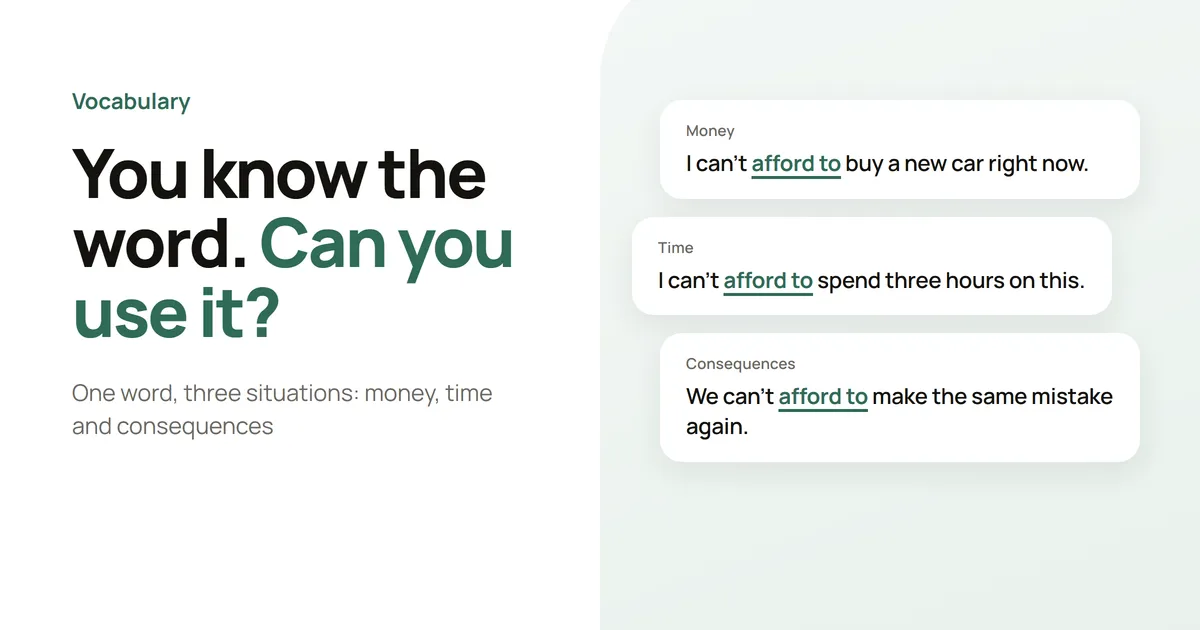
- I can’t afford to buy a new car right now.
- Can we afford another night at the hotel?
- I can’t afford to spend three hours on this.
- We can’t afford to make the same mistake again.
Each sentence adds something to your understanding. You see the structure “afford to do something.” You also see that the word can refer to money, time, or consequences.
A translation gives you a starting point. Different sentences show you how the word works.
When You Remember the Example Instead of the Word
Example sentences are useful. But reviewing the same example every time can create another problem: the sentence itself becomes a clue.
Suppose your card always says:
“She reluctantly agreed to help.”
After enough reviews, you may remember the whole line. You know what comes next before you finish reading it.
Now put the same word somewhere else:
“He reluctantly admitted that he was wrong.”
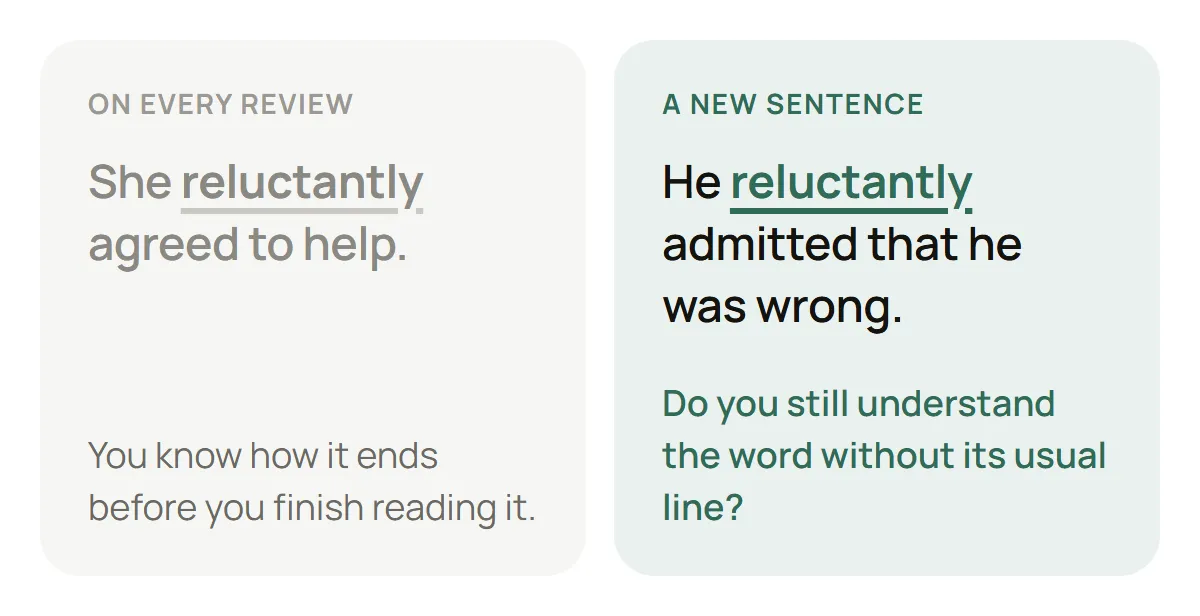
Can you still understand it? Could you use “reluctantly” to describe something you did yesterday?
Changing the context gives you a way to check whether your understanding extends beyond one familiar example.
The goal isn’t to collect dozens of sentences. It’s to become comfortable meeting and using the word in unfamiliar ones.
Writing a Sentence Makes You Do More
When you read an example, someone else has already chosen the grammar and surrounding words.
When you write your own, those decisions become yours.
Try using “avoid.” You might write:
“I avoid to check my phone during meetings.”
Your meaning is clear, but the usual structure is:
“I avoid checking my phone during meetings.”
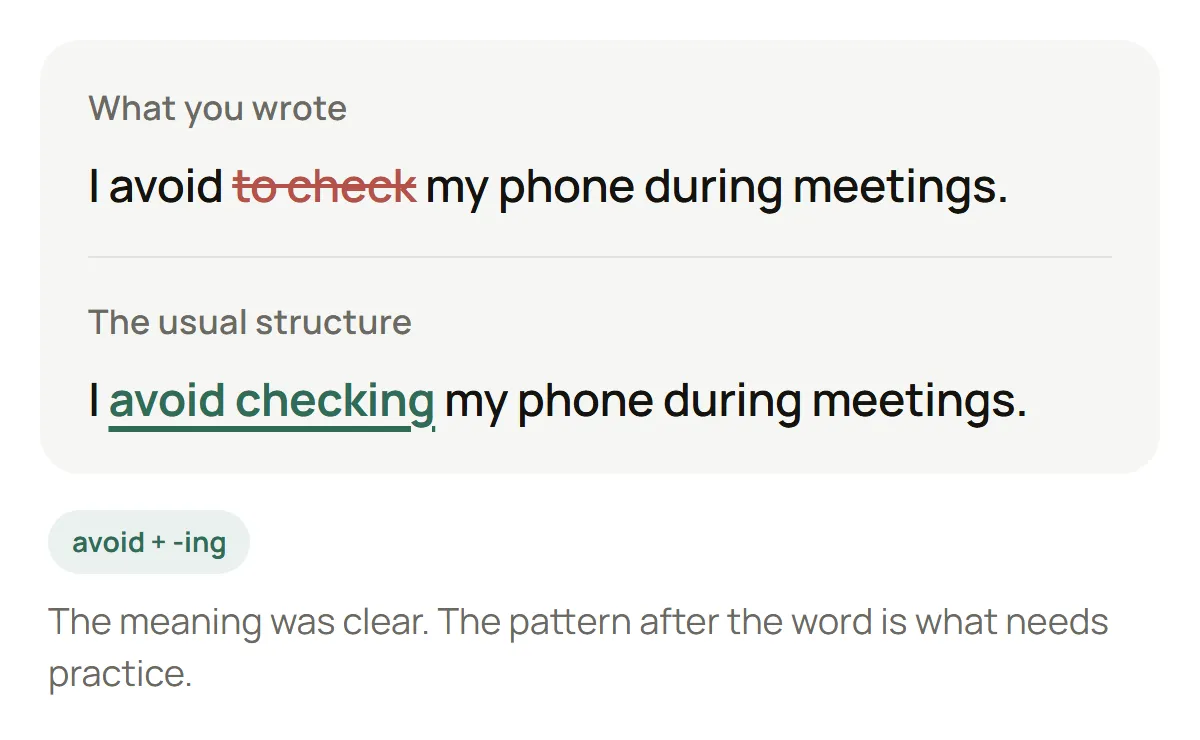
That attempt exposes something a translation card might never reveal: you understand the word, but you still need practice with the pattern that follows it.
This is why producing sentences matters. It gives you something specific to correct.
Reading another example can help. Writing a new sentence lets you check whether you can apply the correction yourself.
Different Contexts Don’t Have to Be Complicated
You don’t need to write an essay every time you learn a word. A few short sentences can give you useful practice.
For “put off,” you could write:
“I put off cleaning the kitchen yesterday.”
Then move it into a work situation:
“We had to put off the release because testing wasn’t finished.”
Then make a question:
“Why do you keep putting off that conversation?”
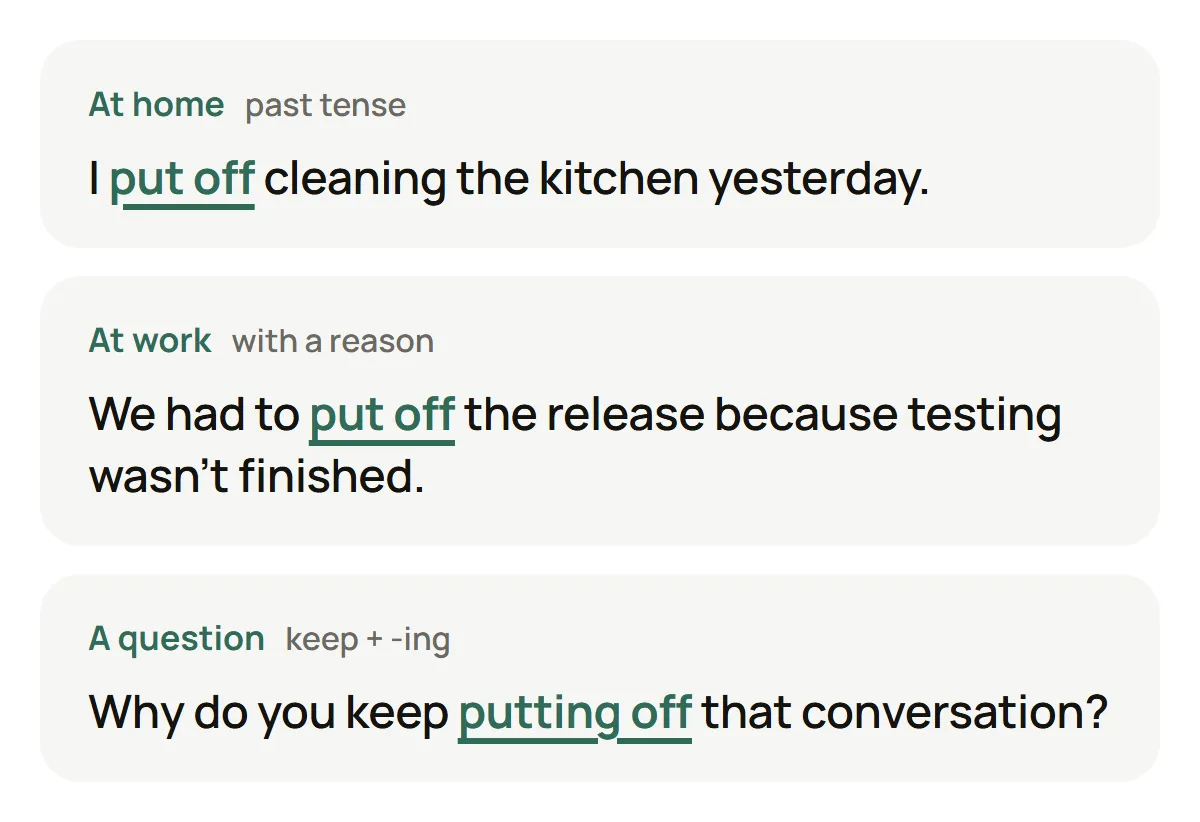
The expression stays the same, while the subject, tense, and situation change.
Keep the sentences simple enough to understand. The challenge should come from using the target word, without having to struggle with every other part of the sentence.
Personal examples are particularly useful here. They let you practice language you might actually need: explaining a delay, describing your weekend, or talking about a decision.
Keep the Flashcards. Expand the Practice.
Flashcards give you a convenient way to return to vocabulary. You don’t need to abandon them. You need to pay attention to what happens during a review.
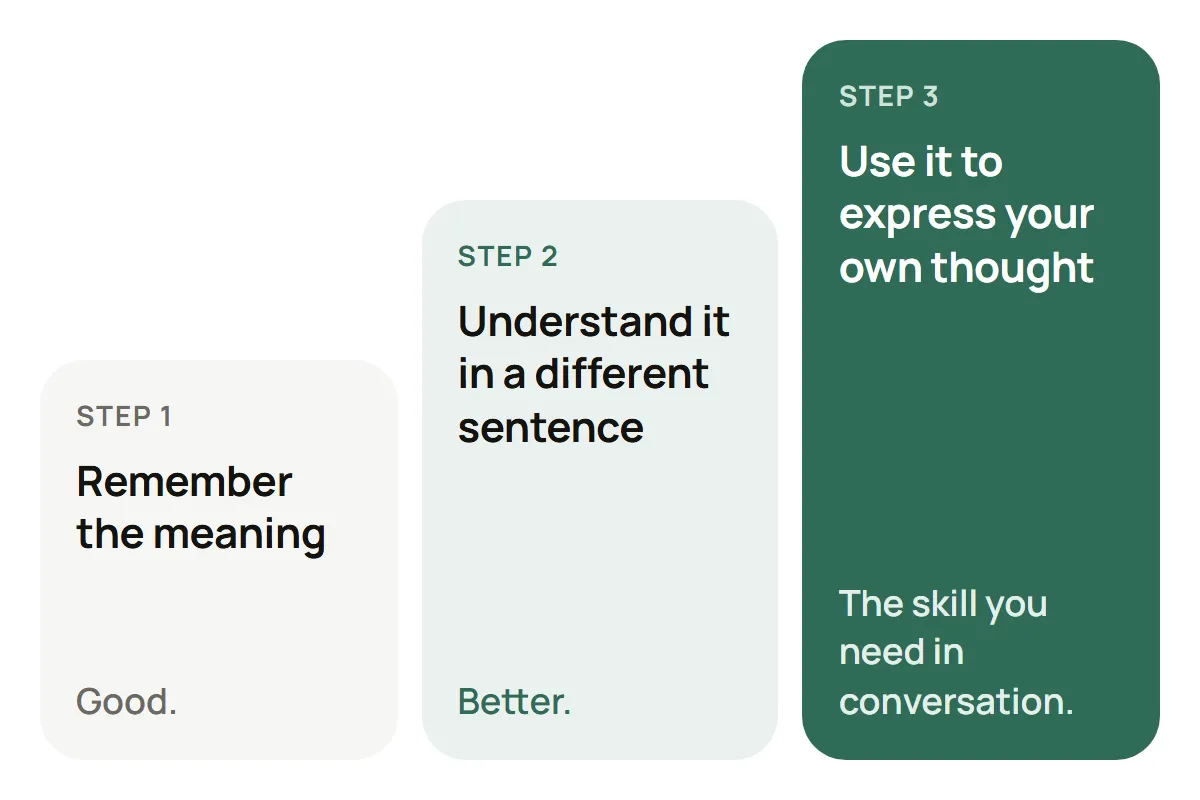
Can you remember the meaning? Good.
Can you understand the word in a different sentence? Better.
Can you use it to express your own thought? That’s the skill you’ll need in conversation.
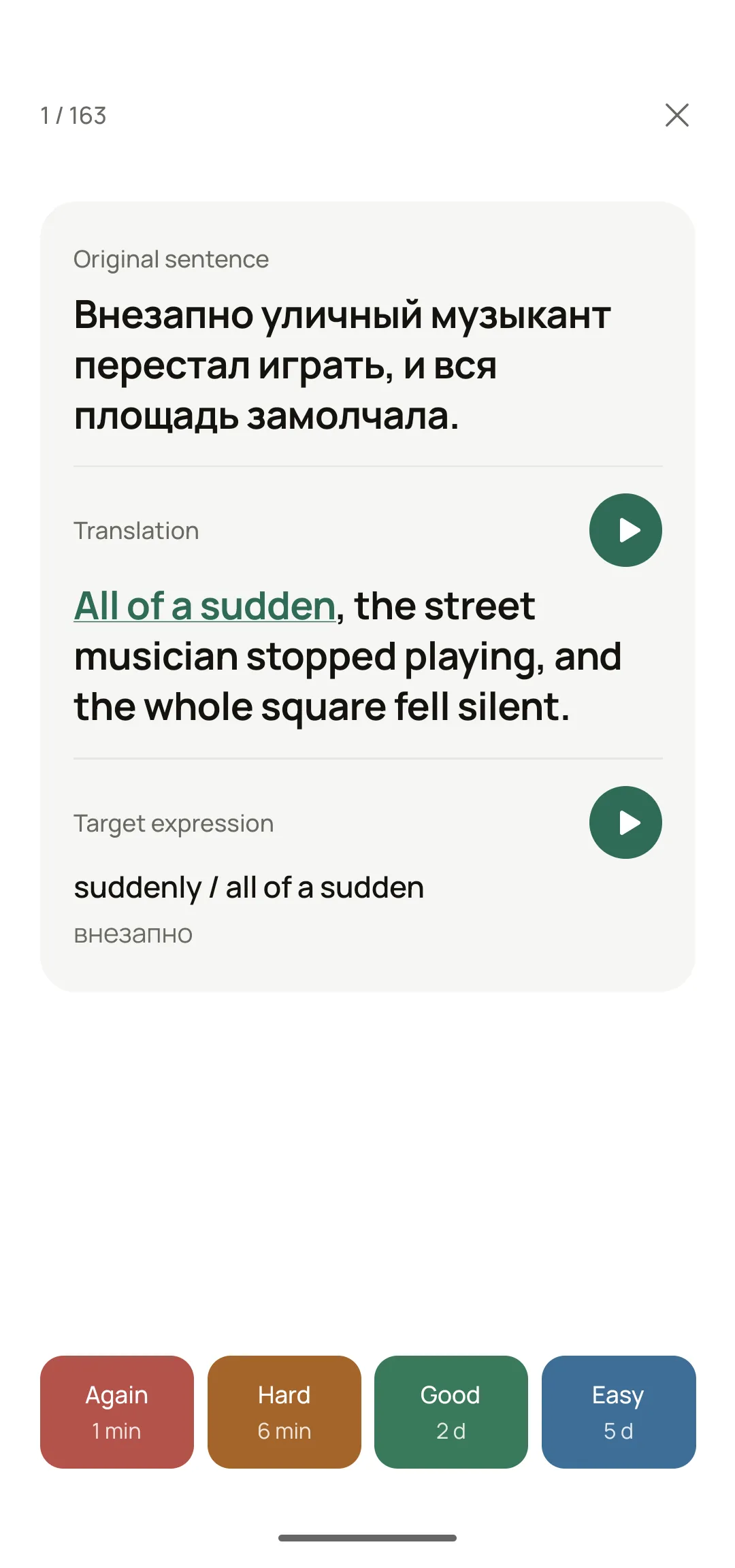
This is the idea behind changing sentence contexts in FlashLoop: giving a familiar word a new setting, so each review asks you to think about its meaning again.
A word becomes useful when you can do something with it. Describe a problem. Tell a story. Ask a question. Say what you actually mean.
Remembering the translation opens the door. Using the word takes you through it.